
On 5 August, the person who runs the Day Cruise Parga boat opened 7 seats for a departure from his phone. A moment later a booking came in. The inventory engine we had put on top of the booking system recalculated availability from its own memory and wrote zero. Six seats were lost, with no error and no notification. When we dug deeper, 25 seats across 7 August dates were at risk.
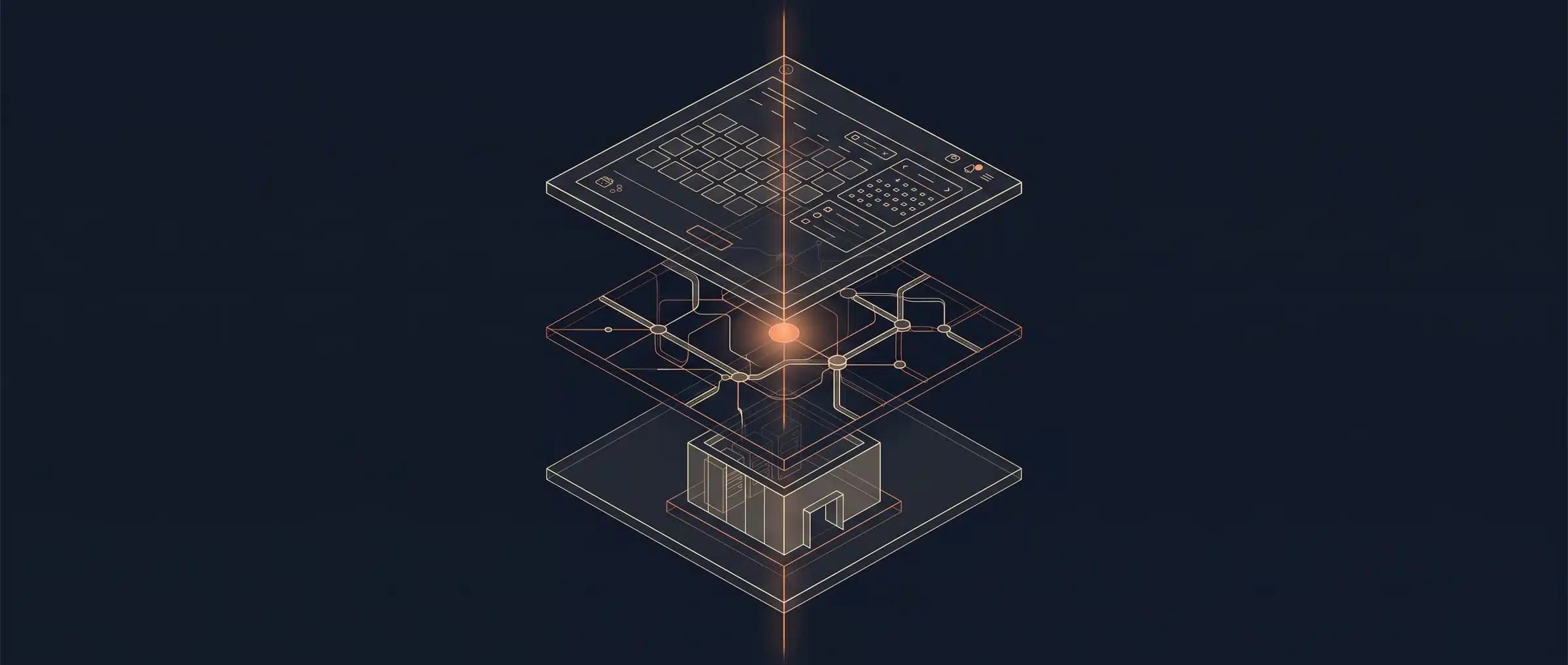
It was not a bug on a single line of code. We were keeping a copy of a number that did not belong to us. Three pieces of software wrote to the same field, and only two of them talked to each other. In our view, that is the most useful question when a property or a tour operator chooses a system: not which software has the most features, but who is the one owner of availability.
In short
- A booking engine, a channel manager and a PMS do three different jobs, and many products sell all three together.
- The question that matters: who is the one owner of availability? One system, with a name.
- For two apartments, careful iCal usually does. From a third channel on, you need a channel manager.
Three tools, three different jobs
The three terms get mixed up constantly, and many products sell all three together. It is worth separating them, because they solve different problems.
- Booking engine is the booking and payment form on your own site. It shows availability, takes the booking, charges the card. Every direct booking is a booking without platform commission.
- Channel manager is the connection to the channels (Booking.com, Airbnb, Expedia) through an API. It sends availability, prices and stay rules from one place and brings the bookings back the moment they happen.
- PMS (property management system) is the work inside the property: arrival and departure, housekeeping, guest details, charges, invoices.
iCal sync is not a channel manager. It carries only blocked days, with hours of delay, and never prices or openings. How that ended in a double booking at two apartments is in our article on iCal overbooking.

Day Cruise Parga: a booking engine and a phone
Day Cruise Parga runs day cruises from Parga to Paxos and Antipaxos. It has no rooms, it has departures with seats. What it needs is a booking engine where each departure has its own live seats, and not a PMS.
What runs today:
- WordPress with WP Booking System and its inventory add-on, where each date has its own seats.
- Payment through Stripe at the time of booking.
- Our app Wide Book Admin on the iPhone, from which the boat crew opens and closes seats between trips.
From this season we keep four lessons, and three of them are our own mistakes.
One number, one owner. The inventory add-on of WP Booking System already does what we wanted our own engine to do: it checks that seats exist before the booking, reduces them on each sale and closes the day at zero. We paused our engine with a backup and a way to restore it, fixed four dates that showed full while selling (or the other way round), and rewrote it to read and compare, not to write.
The cache can close a day. On 14 August we were told a date would not open, although the seats had already been opened correctly from the app. The site page sat in cache for 7 days and nothing cleared it when availability changed. Now every availability change clears the page, and the maximum cache lifetime dropped to one day.
Two bookings at the same moment. Two simultaneous bookings could both pass the availability check. We closed that in July with a lock per calendar, so the second booking waits for the first.
Tour platforms need a connection too. The boat also sells on GetYourGuide, but none of those bookings pass into the system. Syncing is manual: someone reduces the free seats on the site by hand to leave a margin. That margin is seats that are not sold directly. It is the next thing we want to connect, and until then we call it what it is: manual.
There is also a fifth issue we have not closed. A few bookings paid with methods that redirect (Klarna, Revolut) completed the payment but sent no emails and did not keep the customer’s details. We have not found the root yet. What we know is that without a check for “booking without email”, a problem like this is first noticed by the customer.
IgoumenitsaSTAY: when you need none of the three
IgoumenitsaSTAY is a travel guide for Igoumenitsa, Sivota and Thesprotia. It describes itself as an independent local guide, not a booking platform. The accommodations it suggests send the visitor to Airbnb, Booking.com or straight to WhatsApp.
We moved it from Google Sites to WordPress on our own servers, in four languages, and it has been live since 30 September 2026. We did not add a booking engine, channel manager or PMS, because it does not sell nights. We mention it because it is the first question we ask every hospitality business: do you sell yourself, or do you send people somewhere else? If it is the second, the right booking system is the one you do not have to maintain.
When you need a channel manager, and why we did not build our own
For two apartments with Airbnb, Booking.com and their own site, a careful iCal setup with filters usually does the job. A channel manager becomes necessary when:
- you have several identical units of the same room type and need to sell inventory, not one calendar per unit,
- you want prices, minimum stay and closures to change everywhere from one place,
- the channels grow beyond two,
- same-day bookings are frequent and iCal’s delay of hours costs you.
In August we seriously considered building our own channel manager for accommodation. The answer was no. Booking.com states on its connectivity partner page that it has paused integrations with new connectivity providers until further notice. We checked again at the end of September and it still applies. Without a connection to Booking.com, a channel manager for a Greek property does not stand up. For anyone who needs one, the realistic route is an already certified provider, connected to the booking engine of the site.
What we kept from that study are the rules we use to build our own booking system, WideBooking:
- One source of truth for availability.
- Every change records where it came from (site, channel, app, person).
- Silence is not cancellation. A booking missing from a feed does not open the days on its own.
- Temporary holds during payment expire by themselves.
- A request that arrives twice does not write two bookings.
- iCal stays only as a fallback.
PMS: when the work happens inside the property
A PMS makes sense when there is a front desk, staff, scheduled housekeeping and invoices that have to come out right. For two apartments run by the owner from a phone, it is usually a burden: one more subscription, one more place that can disagree with the rest.
A mistake of ours at a rentals business shows it well. The client had told us how many identical vehicles he has in each category. The inventory model we had configured ignored it, and the same vehicle accepted two bookings for the same days. The limit was known. It just was not a rule in the system. Whether you call it a PMS or a booking engine, whatever the owner knows about his stock has to exist as a setting, not in someone’s head.
Before you choose, answer these
- Do you sell yourself? If not, you may need none of the three.
- Who owns availability? One system, with a name. Everything else reads from it.
- Do you sell rooms or seats? A departure with dozens of seats needs a different model from an apartment.
- How many channels do you have, and which? Up to two, iCal with filters holds. Beyond that, you want a channel manager.
- What happens when two bookings arrive together? Ask the provider whether there is locking.
- What does the cache do when availability changes? The page the visitor sees must refresh with it.
- Who finds out first that something went wrong? If the answer is “the customer”, the monitoring is missing.
What we build for accommodation, boats and tours, from the booking site to the staff app, is on the Hospitality page. The booking system built on the rules in this article is WideBooking. If you are not sure which of the three you are missing, tell us what you run today and where your bookings come from.